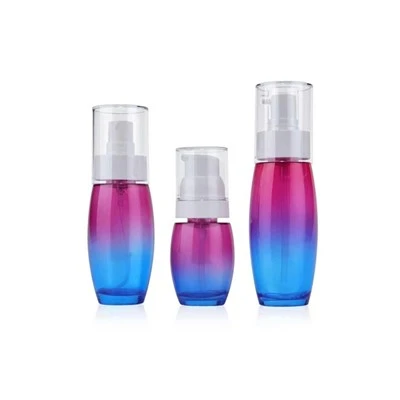
At present, domestic cosmetic containers are divided into many materials, such as PE, PET, PETG, PMMA, AS, PS, PP, etc., as well as glass. The production process of different materials is different, the cost is not the same, and the effect of the product is also very large. the difference. All the following materials are mainly made of domestic raw materials. The effect of import is different, the gap is too big, and the quality of different requirements is very different.
Many cosmetic container creams and lotion bottles use such materials. The materials themselves are not very permeable, with a little matte feel. If you want to brighten, you can only use the process to improve, such as Spraying, electroplating, etc., but usually the choice of such materials is the effect of its own, rarely using additional special processes for processing.
It is commonly known as acrylic material. I believe many people have seen it. The good acrylic looks like crystal, then PETG, AS, PS, PET. The color of acrylic in the picture is because PMMA can't directly and internally. When the material is in contact, it will react. Usually there will be a liner. The inner liner will usually be made of PP material. At the same time, various processes can be done, such as spraying (blue, yellow, red, etc.), electroplating (gold and silver, etc.). . Most of the high-end cosmetics will be made of PMMA.
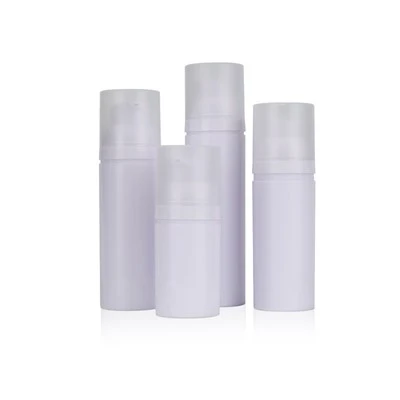
The contents of the cosmetic tube can be isolated from the air, avoiding oxidative deterioration and bacteria growth due to contact with air, and upgrading the product with its high-tech concept. The cosmetic tube that is used in the market consists of a cylindrical ellipsoidal container plus a piston that houses the bottom.
Its design principle is to use the contraction force of the spring, and not let the air enter the bottle, causing the vacuum state, and use the atmospheric pressure to push the piston of the bottom of the bottle to advance. However, due to the spring force and atmospheric pressure, sufficient force cannot be given, so the piston cannot be too tightly attached to the bottle wall, otherwise the piston will not be able to rise due to excessive resistance; on the contrary, if the piston is easy to advance and is prone to leakage, Therefore, cosmetic tubes have very high requirements for the professionalism of manufacturers.