Plastic hose commonly used in cosmetic packaging and its characteristics
At present, the commonly used plastic hose in cosmetic packaging mainly includes aluminum-plastic composite hose, all plastic composite hose and plastic coextrusion hose, which can meet the various needs of cosmetic packaging, such as hygiene, barrier and so on.
1. Aluminum plastic composite hose
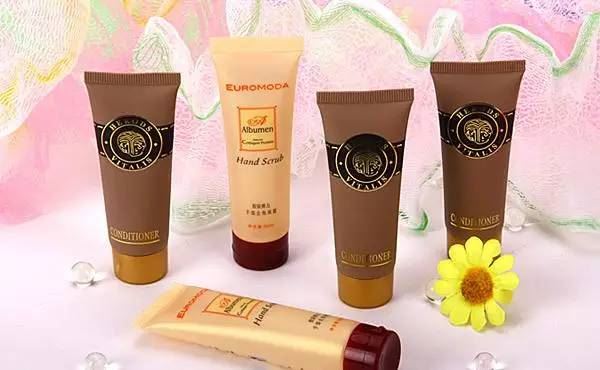
Aluminum plastic composite hose is a kind of packaging container made of aluminum foil and plastic film by coextrusion process, and then processed into tubular by special pipe making machine. Its typical structure is PE / PE + EAA / Al / PE + EAA / PE. Aluminum plastic composite hose is mainly used for packaging cosmetics with high requirements for hygiene and barrier. Its barrier layer is generally aluminum foil, and its barrier depends on the pinhole degree of aluminum foil. With the continuous improvement of technology, the thickness of aluminum foil barrier layer in aluminum plastic composite hose has been reduced from 40 μ m to 12 μ m or even 9 μ m, which greatly saves resources.
Aluminum plastic composite hose has the following advantages in use:
(1) high barrier properties, aluminum foil has barrier properties such as light resistance, oxygen resistance and water blocking. On the one hand, it can prevent external substances from intruding into cosmetics, prevent cosmetics from oxidation and deterioration, and prevent moisture and flavors in cosmetics from spreading to the outside through the hose, so as to ensure the quality of cosmetics.
(2) Low cost. In order to achieve the same barrier performance, the aluminum-plastic composite hose has less materials, lower cost and better economy than all plastic composite hose and plastic coextrusion hose.
2. All plastic composite hose
All plastic composite hose is made of plastic, which is divided into two types: all plastic non barrier composite hose and all plastic barrier composite hose. All plastic non barrier composite hose is generally used for packaging of low-grade and fast consuming cosmetics; all plastic barrier composite hose is usually used for packaging of medium and low-grade cosmetics due to the edge seam of the pipe, and the barrier layer can be multilayer composite material containing EVOH, PVDC, oxide coating pet, etc. The typical structure of all plastic barrier composite hose is PE / PE / EVOH / PE / PE.
The advantages of all plastic composite hose are as follows:
(1) Environmental protection. Compared with aluminum-plastic composite hose, all plastic composite hose adopts economic and easy to recycle all plastic sheet, which can reduce environmental pollution caused by packaging waste. Recycled all plastic composite hose can produce relatively low-grade products after reprocessing.
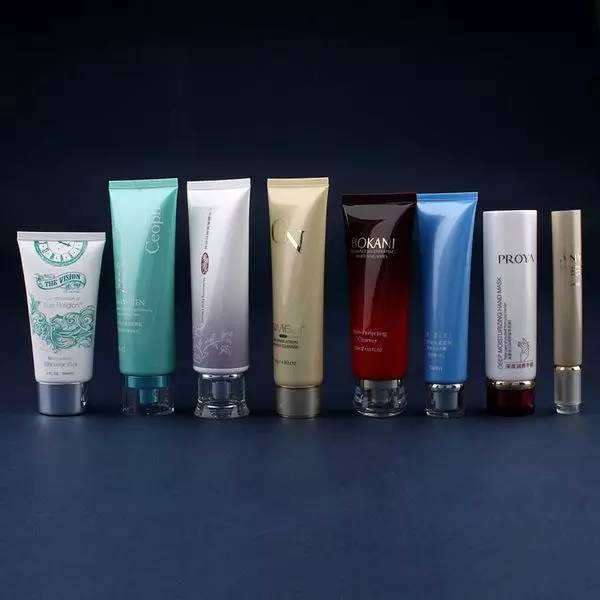
(2) Color diversity. According to the characteristics of cosmetics and different consumer needs, all plastic composite hose can be made into different colors, such as colorless transparent, color transparent, color opaque and so on, which brings strong visual enjoyment to consumers. In particular, the transparent all plastic composite hose can clearly see the color state of the contents, give people a strong visual impact, and greatly promote the purchase desire of consumers.
(3) Good resilience: compared with the aluminum-plastic composite hose, the all plastic composite hose has better resilience, which ensures that the hose can quickly return to the original shape after extruding cosmetics, and always maintain a beautiful and regular appearance. This is very important for cosmetic packaging.
3. Plastic coextrusion hose
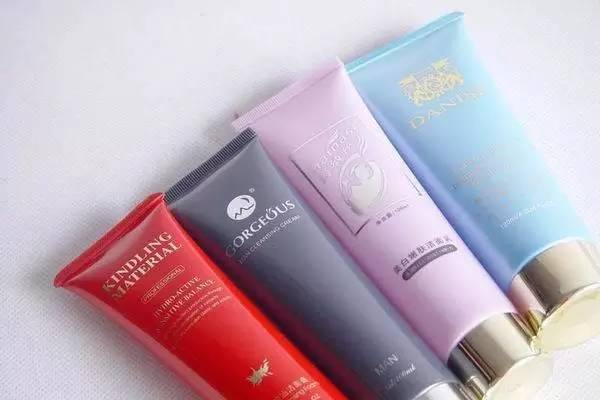
Coextrusion technology is used to coextrusion different kinds of raw materials with different properties, forming one time. Plastic coextrusion hose is divided into single-layer and multi-layer coextrusion hose. The former is mainly used for the packaging of fast consuming cosmetics (such as hand cream) with high appearance requirements and low actual performance requirements, while the latter is mainly used for the packaging of high-grade cosmetics.
The main advantages of coextrusion hose are as follows:
(1) Because there is no side seal, the appearance effect is better than the composite hose, which is necessary for the packaging of high-grade cosmetics hose.
(2) According to the different extrusion die, we can produce various shapes of extrusion hose, such as oval, square and so on, to meet the needs of different consumers.
4. Defect analysis of various plastic hose
The above mentioned three kinds of plastic hose for cosmetic packaging have their own disadvantages:
(1) Due to the use of aluminum foil, aluminum-plastic composite hose has many disadvantages, such as invisible content, poor environmental protection, poor resilience, lower composite strength and easy delamination.
(2) The barrier property of all plastic composite hose mainly depends on the type and thickness of barrier material. Taking EVOH as the barrier material, for example, to achieve the same barrier property and stiffness, the cost of all plastic composite hose is about 20% - 30% higher than that of aluminum plastic composite hose. In a long period of time in the future, this will become the main factor limiting the replacement of aluminum-plastic composite hose by all plastic composite hose.
(3) The production and processing technology of plastic coextrusion hose is generally tube making before printing. For the printing process, the efficiency is low, the process is complex and difficult.
Advantages of plastic hose in cosmetics packaging
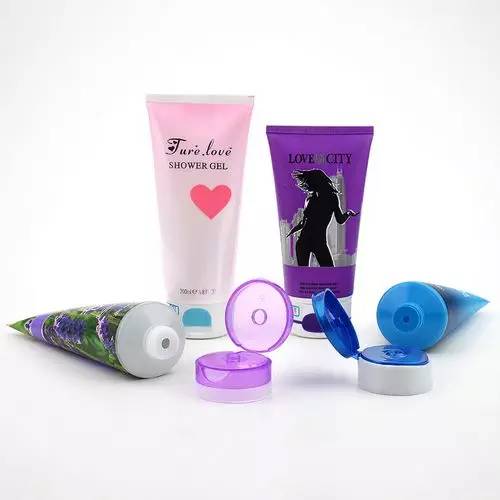
Plastic hose is sanitary and convenient to use, and its surface is bright and beautiful. Therefore, it has been widely used in the packaging of paste cosmetics, such as the packaging of facial cleanser, hair conditioner, hair dye, toothpaste and other products in the cosmetics industry, as well as the packaging of cream, paste and other external medicine products in the pharmaceutical industry.
Plastic hose packaging is economical and convenient, easy to carry, even if the whole body is extruded with high strength, it can still return to its original state and maintain a good appearance. Data show that 60% ~ 70% of the hose is used in the cosmetics industry, 10% ~ 15% in the pharmaceutical industry, and about 5% in the food industry. Therefore, how to better realize the design concept of products through hose packaging, strengthen the decorative effect of hose packaging, so as to more quickly attract the attention of consumers and fit the brand temperament, has become an important topic for end users.
Product structure of plastic hose packaging
The main part of plastic hose includes shoulder, barrel (body) and tail. The barrel is often decorated by direct printing or self-adhesive label to carry text or pattern information and enhance the value of product packaging.
At present, the decoration of hose is mainly realized by direct printing and self-adhesive label. Direct printing, including screen printing and offset printing. Compared with direct printing, the advantages of self-adhesive label include: printing diversity and stability: the traditional extrusion hose process of first making tube and then printing usually uses offset printing and screen printing, while the self-adhesive printing can adopt a variety of combined printing processes, such as relief, flexographic, offset printing, screen printing and gilding, which makes the difficult color performance more stable and excellent.
Reasonable selection of plastic hose
In the cosmetics industry, packaging quality is the second life of products. According to the characteristics and sales of cosmetics and other factors, choosing the appropriate plastic hose as the packaging can make cosmetics more attractive under the foil of high-quality packaging.
1. Health and safety
Cosmetics are in direct contact with human body, which puts forward high health and safety requirements for its packaging. For the plastic hose, it should be controlled from the aspects of raw material safety (raw material particles must comply with relevant laws and regulations, such as FDA, SGS certification, etc.), production process, production environment, etc., so as to ensure the health and safety of cosmetics.
2. Protection
Packaging materials should have enough mechanical strength, barrier, chemical resistance and weather resistance to prevent quality problems in the process of filling, storage and transportation.
(1) Mechanical properties. The main function of packaging is to use its mechanical properties to ensure that the contents are not damaged. The mechanical properties of plastic hose for cosmetic packaging, such as compression resistance, impact resistance and bending strength, are mainly determined by the nature of the packaged products, packaging machinery and storage and transportation requirements. Generally speaking, the plastic hose must have a certain stiffness to ensure that the overall shape of the product is intact; at the same time, it also needs to have good resilience to ensure that it can return to the original shape after extrusion. However, in the same material composition and the same thickness conditions, stiffness and resilience are a pair of contradictions, only when both are taken into account, can customer demand be met.
(2) Barrier performance. The commonly used barrier materials for plastic soft packaging of cosmetics include aluminum foil, EVOH, oxide coating pet and nylon. The barrier properties vary with the materials and thickness. For example, aluminum foil has high barrier property, when the thickness of aluminum foil is more than 25 μ m, its barrier property can reach 100%; the oxygen barrier property of EVOH is directly proportional to its thickness, the oxygen permeability of EVOH with 15 μ m thickness is about 0.3 ~ 0.4cc / m2 · 24h (MOCON detection method); the oxygen permeability of pet with oxide coating is generally 0.2 ~ 1.0cc / m2 · 24h (MOCON detection method). Therefore, different barrier materials should be selected according to the requirements of the packaged cosmetics. In addition, the interaction between fragrance and packaging materials should be considered. For example, polyolefin materials absorb essential oils. At this time, a protective coating between aluminum foil and polyolefin materials can be added.
(3) Chemical resistance and weather resistance. The material selected for plastic hose for cosmetic packaging should be resistant to chemical corrosion of contents, including oil resistance, fat resistance, acid resistance, etc. the matrix resin can be optimized according to the actual conditions and needs to meet the use requirements. For example, HDPE has better chemical resistance than LDPE.
The weatherability of plastic hose is related to the temperature resistance, dimensional stability and environmental stress cracking resistance of the materials used. Only by ensuring the short-term or long-term performance of plastic hose can the quality and safety of cosmetics be guaranteed. For example, some cosmetics are suitable for use in cold winter. If PP and other conventional materials are used in the plastic hose, a series of problems may occur, such as failing to pass the drop test, tube explosion and so on. This is because the glass transition temperature of PP is about - 10 ℃, and it is brittle and fragile at low temperature. At this time, we need to adjust the formula structure of the plastic hose, use toughening materials to improve the impact strength of the plastic hose.
3. Operability
In order to facilitate printing and packaging operations and adapt to mechanized operation, plastic hose for cosmetic packaging should have good printability, heat sealing performance and packaging machine adaptability.
(1) Printability. From the printing point of view, aluminum-plastic and all plastic composite hose has more advantages than plastic coextrusion hose. Because the aluminum-plastic and all plastic composite hose are first made of different materials through extrusion process, and then the tube is made after slitting and printing process, or the inner printed film is made after extrusion and slitting process; while the plastic coextrusion hose is made of tube before printing, which will inevitably lead to the complexity of the printing process.
(2) Heat sealing performance. The heat sealing performance includes two indexes: the initial sealing temperature and the heat sealing strength. Especially for some temperature sensitive cosmetics, it is required that the temperature at the end of the pipe should not be too high. At this time, some low-temperature heat sealing materials can be used for the heat cover to ensure the low-temperature sealing without affecting the quality of cosmetics. When filling cosmetics, the contents may pollute the sealing, and the plastic hose processed with general materials can not be well sealed, but if the hot cover is made of anti pollution materials, the problem can be effectively solved.
4. Economy
In the aluminum-plastic composite hose, the unit price of aluminum foil is the highest. Controlling the thickness of aluminum foil can effectively control the cost of the hose. Therefore, on the premise of ensuring good product performance, using thinner aluminum foil, reducing the loss in the production process, and using simplified packaging as far as possible can reduce the cost of aluminum-plastic composite hose.
At present, the cost of all plastic composite hose is relatively high. On the premise of not affecting the performance, thinning thickness is also one of its future development directions. Therefore, high stiffness materials (such as PP, etc.) will be more and more used in all plastic composite hose.
In order to reduce the printing cost of Plastic Co extrusion hose and make use of its appearance advantage (no edge seal), a new hose structure has been formed. The structure is that the transparent plastic coextrusion hose is sheathed on the outside of the printed composite hose through a special process, so that the printed pattern inside is clearly presented in front of consumers, while maintaining the excellent handle of the plastic coextrusion hose.
Prospect of future development trend
In recent years, more and more cosmetic manufacturers began to pay attention to environmental protection, green packaging will become a trend. At present, aluminum plastic composite hose is still the main packaging material of high barrier products, which consumes a lot of resources and is very difficult to recycle. Using EVOH, SiOx coating and other barrier materials to replace aluminum foil, not only can achieve high barrier, but also can be recycled. However, due to the high cost, its wide use is limited. On the other hand, the development and application of degradable plastics alleviate the environmental problems to a certain extent. NatureWorks polymer produced by NatureWorks LLC is a kind of polylactic acid resin, which can be used to process all kinds of plastics and packaging, and has good biodegradability.
At the same time, the multi-layer composite hose with protective, functional and decorative properties will occupy more markets in the future, and the multi-layer coextrusion hose will gradually replace the single-layer coextrusion hose to further enhance the protection of cosmetics. In addition, the use of advanced technology to minimize the visibility of plastic hose joints, so that the plastic hose looks more beautiful, will also be one of the future development trends.